At Compass Counselling, we often see how daily habits can shape people’s wellbeing—mentally, physically, and emotionally. Habits can either support your growth or keep you stuck in cycles that don’t serve you. The good news is that you can build new, healthy habits that positively transform your life.
Why Habits Matter
Habits are the small, repeated actions that form the foundation of your daily life. They free up mental energy because once something becomes automatic, your brain doesn’t have to work as hard to decide what to do next. This leaves more energy for creativity, problem-solving, and emotional regulation.
Healthy habits—like regular exercise, mindful eating, meditation, and consistent sleep—support long-term physical and mental health. Conversely, unhelpful habits (like constant scrolling, smoking, or unhealthy eating) can keep you trapped in patterns that damage wellbeing.
What Happens in the Brain with New Habits
When you repeat a behaviour, your brain creates and strengthens neural pathways. Over time, these pathways become “hardwired,” making the behaviour easier and more automatic. This process is called neuroplasticity—your brain’s ability to change and adapt throughout your life (Doidge, 2007).
The basal ganglia, a part of the brain involved in movement and decision-making, plays a crucial role in habit formation. Meanwhile, the prefrontal cortex, which is responsible for decision-making and self-control, helps to initiate and regulate habits in their early stages (Graybiel, 2008).
As you repeat a new action, dopamine (the brain’s reward chemical) reinforces the behaviour. This is why small wins, like ticking something off a list, feel so good—they literally train your brain to keep going.
How Long Does It Take to Form a Habit?
There’s a common myth that it takes 21 days to form a new habit. In reality, the timeline is more flexible. Research shows it can take anywhere from 18 to 254 days, with an average of about 66 days for a new behaviour to become automatic (Lally et al., 2010).
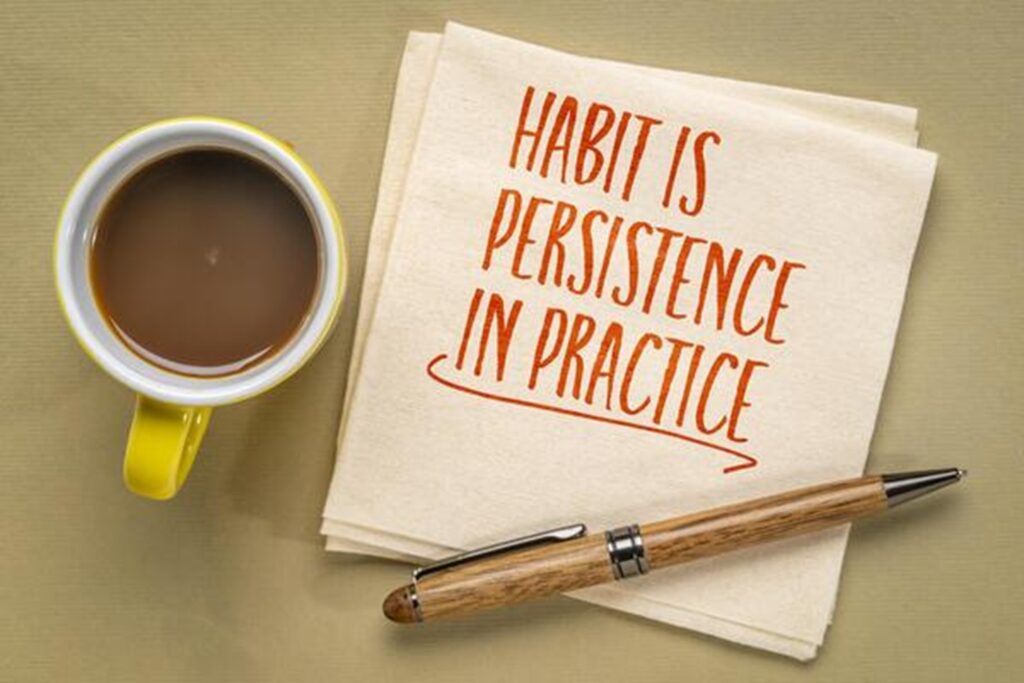
This means patience and persistence are key. Missing a day won’t ruin your progress—what matters is returning to the habit consistently over time.
Practical Strategies for Building Habits
Psychologist and author James Clear, in his bestselling book Atomic Habits (2018), outlines a powerful framework for habit creation and change. He describes the “Four Laws of Behaviour Change” as:
- Make it obvious – Use visual or environmental cues to remind yourself of the habit.
- Make it attractive – Pair the habit with something you enjoy, increasing motivation.
- Make it easy – Start with small, simple steps so the habit doesn’t feel overwhelming.
- Make it satisfying – Reward yourself or track your progress to stay motivated.
Clear emphasises that habits aren’t about sudden overnight transformations—they are about small, consistent improvements that compound over time. This idea aligns with brain science: small, repeatable actions rewire your brain pathways more effectively than big, unsustainable bursts of effort.
How to Build New Habits – other tips
Here are some practical ways to start:
- Start small – Break big goals into tiny steps. Instead of aiming for an hour at the gym, start with 10 minutes of walking.
- Use cues – Link your habit to something you already do. For example, practice gratitude each night after brushing your teeth.
- Celebrate wins – Reward yourself for sticking with it. Even small celebrations reinforce the new pathway in your brain.
- Focus on consistency, not perfection – It’s okay to miss a day. What matters is building a pattern of returning to the habit.
- Pair with meaning – Connect your new habit to your values or bigger purpose. Habits stick when they feel important to your identity.
Final Thoughts
Good habits are more than routines—they are investments in your future wellbeing. By understanding how your brain changes with practice, and by committing to small, consistent actions, you can create habits that truly support your health, happiness, and resilience.
How Compass Counselling Can Support You
If you’d like to explore this further, we’ve created a free Habits Workbook available on our website, designed to help you reflect on your current habits and create new ones that support your wellbeing.
For more personalised support, you can also book a session with Compass Counselling. Together, we can explore your goals, identify the barriers holding you back, and develop practical, meaningful strategies to help you succeed. Please contact us to find out more about our services: Contact Us – Compass Counselling.
References
- Clear, J. (2018). Atomic Habits: An Easy & Proven Way to Build Good Habits & Break Bad Ones. Avery.
- Doidge, N. (2007). The Brain That Changes Itself: Stories of Personal Triumph from the Frontiers of Brain Science. Viking.
- Graybiel, A. M. (2008). Habits, rituals, and the evaluative brain. Annual Review of Neuroscience, 31, 359–387. https://doi.org/10.1146/annurev.neuro.29.051605.112851
- Lally, P., van Jaarsveld, C. H., Potts, H. W., & Wardle, J. (2010). How are habits formed: Modelling habit formation in the real world. European Journal of Social Psychology, 40(6), 998–1009. https://doi.org/10.1002/ejsp.674